
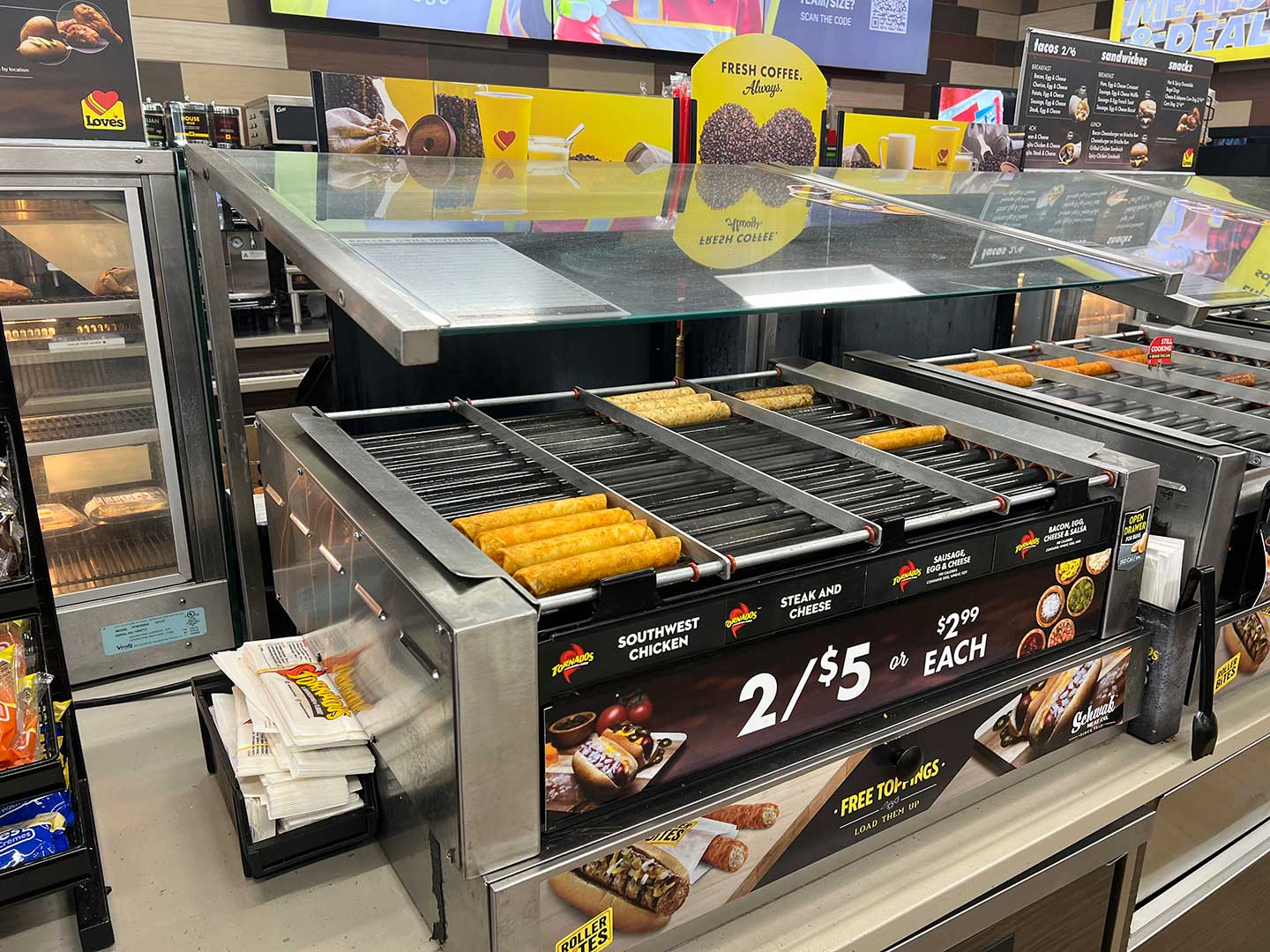
A commercial hot dog roller can cook product. A well-designed roller grill program can do much more. The strongest programs bring together equipment, product visibility, assortment, merchandising, food protection, employee access and customer convenience to create a foodservice destination that is easy to shop and easier to operate.
Roller grill remains a visible part of convenience store foodservice, but the opportunity extends well beyond putting hot dogs on rollers.
Retailers are using roller grill products as snacks, meal components, limited-time offers and value promotions. This summer, 7-Eleven promoted a $3 meal combining a roller grill item, chips and a fountain drink while also introducing new grill items and mix-and-match offers. Rutter’s has similarly used hot dogs as part of seasonal value promotions.
That points to a larger opportunity.
The roller grill can serve as a flexible foodservice platform, but only when the program around the equipment is designed to support it.
1. Make the Food Easy to See
The first job of a roller grill program is simple: get noticed.
Customers should be able to recognize the food offer quickly as they move through the store. That means thinking about more than the grill itself.
Consider:
- Is the food clearly visible?
- Can customers identify what is on the grill?
- Is pricing easy to understand?
- Are promotional messages competing with product visibility?
- Can a customer approach the program without having to search for what comes next?
A roller grill already has an advantage over food hidden inside packaging or behind a closed door. The product is visible. Good merchandising protects that advantage instead of covering it up.
Food protection is important, but it should be planned with visibility and access in mind. Signage should identify the offer without creating clutter. The surrounding fixture should support the food rather than compete with it.
If the customer has to work to understand the offer, the program has already introduced friction.
2. Build an Assortment, Not a Crowd
More products do not automatically create a stronger roller grill program.
The goal is to offer enough variety to create choice without making the program confusing or difficult to maintain.
A strong assortment may include dependable core items alongside rotating flavors, seasonal products or limited-time offers. That gives regular customers something familiar while creating reasons to notice the program again.
Recent convenience store promotions show how flexible the category can be. Roller grill menus now extend well beyond the traditional hot dog into sausages, taquitos and other handheld foods, giving operators opportunities to address different tastes, dayparts and meal occasions.
The operational question matters just as much as the menu question:
Can the store execute the assortment consistently?
Every additional item may affect stocking, labeling, cook times, holding procedures, waste and employee training. The best assortment is not necessarily the biggest one. It is the assortment the operation can execute well.
3. Design What Happens Around the Grill
The roller grill may be the center of the program, but it is not the entire program.
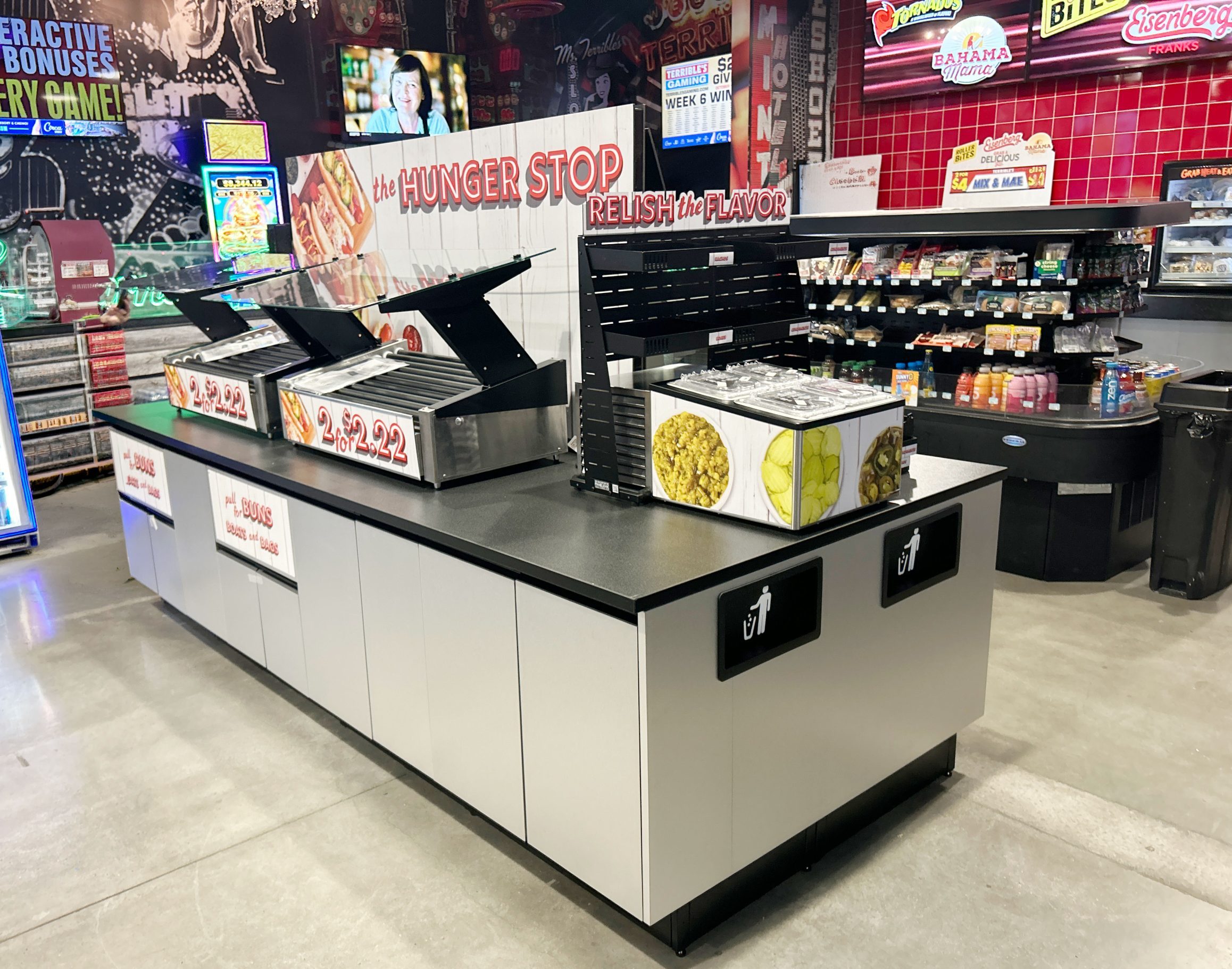
Once customers select an item, what happens next?
They may need:
- buns
- boats, trays or other packaging
- napkins
- condiments
- toppings
- product identification
- pricing
- beverages or sides
Those pieces should feel like part of one journey.
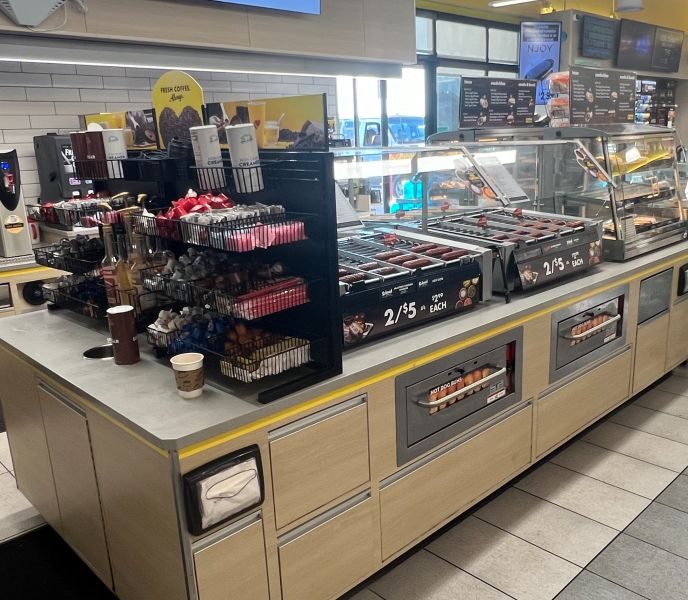
If buns are across the aisle, condiments are difficult to find or packaging is stocked wherever space happened to be available, every extra step creates friction.
A well-designed program considers the path from seeing the product to completing the purchase.
That does not mean everything has to be packed into the smallest possible footprint. It means every piece should have a reason for being where it is.
4. Design for the Employee Too
Customer convenience gets attention, but the employee experience can determine whether the program remains strong throughout the day.
Employees have to load product, monitor the grill, replenish supplies, clean the equipment and surrounding area, manage waste and keep the presentation organized.
Ask:
Can the grill be accessed easily for loading?
Can food protection be moved or accessed for routine cleaning?
Are frequently used supplies within reach?
Can employees replenish buns, condiments and packaging without disrupting customers?
Is the setup intuitive enough that a new employee can understand how it works?
The right equipment should fit the operation, not force the operation to work around the equipment.
That includes selecting a commercial roller grill with the appropriate capacity, footprint and operating features for the location, but it also includes thinking about the environment immediately around it.
5. Think Beyond the Individual Item
One of the most important opportunities is to stop thinking only about the sale of a single hot dog, sausage or taquito.
The roller grill can also participate in a larger meal occasion.
7-Eleven’s recent roller grill meal promotion paired a grill item with chips and a fountain beverage. That approach reflects something convenience stores already do particularly well: make it easy to assemble a meal quickly.
Operators can think about natural attachments around the grill:
What beverage belongs with this item?
What side makes sense?
Can the offer be communicated as a simple combination?
Are those products physically easy to find?
The objective is not to turn a convenience store into a restaurant. The advantage is still convenience.
A strong roller grill program should make the path from hungry to fed remarkably short.
6. Make the Program Easy to Change
Menus change.
Promotions change.
Customer preferences change.
A new product may require different signage. A seasonal offer may need more merchandising space. A new grill may eventually have a different footprint or capacity.
That is why adaptability should be considered when the program is designed, not after the first change arrives.
Fixtures, food protection, merchandising and organization systems that can accommodate change give operators more room to test what works without treating every adjustment like a remodel.
A roller grill program should be designed for today’s menu while leaving space for tomorrow’s opportunity.
7. Measure the Program, Not Just the Sales
Sales matter, but they are not the only number worth watching.
Operators can learn a great deal by tracking:
- unit sales by item
- sales by daypart
- product waste
- out-of-stock periods
- replenishment frequency
- promotional performance
- beverage or side attachments
- performance of limited-time items
Those numbers can help answer practical questions.
Is an item earning its place on the grill?
Are customers buying certain products primarily at lunch or late at night?
Is a large assortment creating unnecessary waste?
Are promotions moving incremental product or simply discounting items customers would have purchased anyway?
The roller grill itself is equipment.
The roller grill program is a business.
Treating it that way creates better questions and, ultimately, better decisions.
The Four Jobs of a Modern Roller Grill Program
A strong roller grill program should accomplish four things:
Get seen.
Make the food visible and the destination easy to find.
Get understood.
Make products, pricing and the next step clear.
Get purchased.
Remove unnecessary friction between product selection and checkout.
Get replenished.
Give employees a program they can load, clean, organize and maintain throughout the day.
When those four jobs work together, a commercial hot dog roller becomes more than a piece of cooking equipment.
It becomes a flexible convenience store foodservice platform built around visibility, speed, execution and the customer experience.
That is the difference between putting a roller grill in the store and building a roller grill program.