
Why One of Foodservice’s Most Proven Platforms Is Winning Again
Walk into a successful convenience store, travel center, stadium concession, corporate dining venue, school, hospital, food truck, or community sports complex, and there is a good chance you will find one piece of equipment quietly earning its floor space hour after hour.
The roller grill.
It is familiar. It is visible. It is easy to understand. And for generations of operators, it has delivered something every foodservice program needs: a compact way to serve hot food quickly, consistently, and across multiple dayparts.
Foodservice has changed dramatically around it. Menus have expanded. Technology has transformed ordering. Customer expectations have risen. Operators have invested in made to order kitchens, premium beverages, fresh prepared foods, and sophisticated grab and go programs.
Yet the roller grill never disappeared. It adapted.
That is why the current conversation around a roller grill renaissance matters. This is not nostalgia. It is a recognition that one of foodservice’s most proven platforms fits remarkably well with what operators need now: strong visibility, operational simplicity, all day opportunity, flexible menus, and a small footprint that can produce an outsized return.
Foodservice Has Become Too Important to Treat as an Afterthought
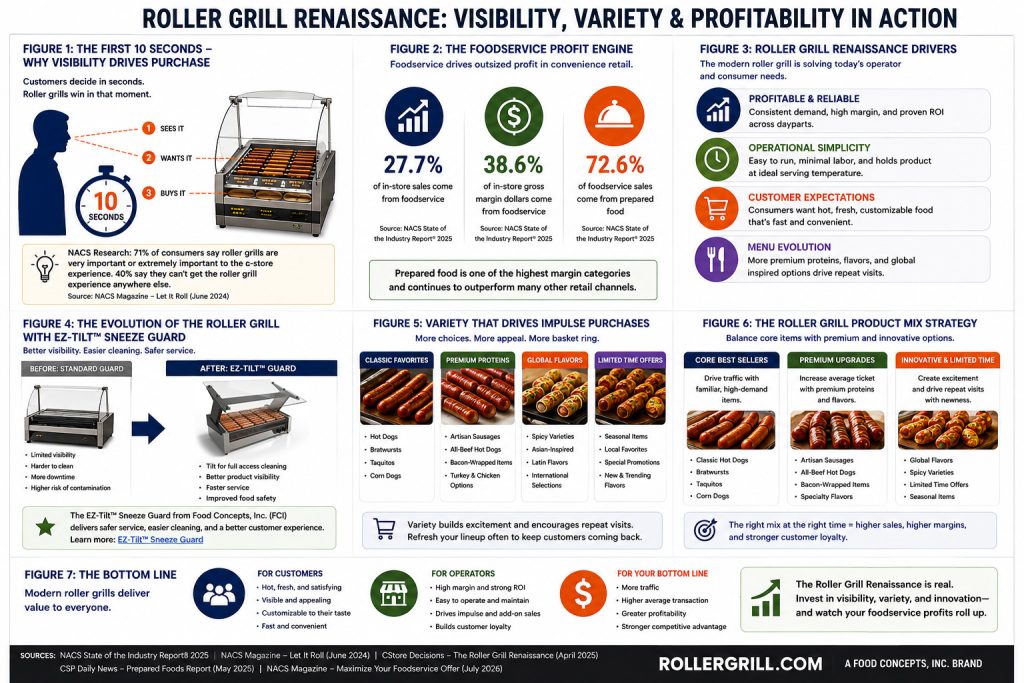
The financial context is clear. According to NACS 2025 industry data, foodservice accounted for 28.0% of convenience store in store sales in 2025 and contributed 38.9% of in store gross profit dollars. Prepared food represented 73.9% of foodservice sales, up from 66.4% in 2021. That means the conversation around roller grills is not really about one piece of equipment. It is about how operators capture a larger share of one of the most important profit engines in the store.
The momentum is continuing. In July 2026, NACS Magazine reported that convenience stores are projected to outpace overall foodservice and quick service restaurant growth, while consumers are increasingly choosing prepared foods for impulse purchases. Packaged goods represented 47% of c store impulse purchases in the cited research, down six points from three years earlier, while prepared food rose nine points to 38%.
For operators, the implication is significant: prepared food is not simply competing with restaurants. It is increasingly competing with packaged snacks for the impulse purchase itself.
The Roller Grill Never Really Left
The most persuasive evidence comes from consumers themselves. In NACS Magazine’s “Let It Roll”, a Johnsonville survey of 2,500 consumers found that 71% considered roller grills very important or extremely important to the convenience store experience. Respondents cited the ability to see the product, choose what they wanted, and customize it. Forty percent said they could not get the roller grill experience anywhere else.
That matters because it changes the story. The roller grill is not being revived by operators trying to recreate the past. A core customer base never stopped valuing the format in the first place.
The same NACS article reported examples of retailers receiving customer backlash after removing roller grills, and operators such as Love’s Travel Stops continuing to add them to new stores. It also documented year over year sales increases at Duchess locations and described roller grill items as especially effective for customers who need fast service. The roller grill remains a destination within modern convenience foodservice, even when stores also offer deli, hot case, and made to order programs.
The Business Case: A Small Footprint That Keeps Working
Every foodservice asset competes for space, labor, attention, and capital. Great equipment earns its place by producing value repeatedly, not by looking impressive on opening day.
The roller grill has a particularly compelling operating profile because the same footprint can serve multiple dayparts and multiple customer missions.
Breakfast can bring sausages, breakfast rollers, and portable handheld items. Lunch can shift toward hot dogs, brats, taquitos, and filled snacks. Afternoon traffic can lean into snacking and impulse. Evening and late night can serve commuters, travelers, shift workers, entertainment guests, and anyone looking for a fast meal without a wait.
One investment. Multiple revenue windows.
That is why the roller grill should be evaluated as a business platform, not simply as a cooking appliance. The better question is not only what it cooks. The better question is what business problems it solves.
Serve hot food quickly without forcing every order through a made to order process.
Generate sales opportunities across breakfast, lunch, afternoon, evening, and late night.
Use a compact footprint in locations where every square foot matters.
Create visible, easy to understand impulse opportunities.
Refresh menus with new flavors and limited time offers without replacing the core platform.
Encourage attachment sales with beverages, snacks, condiments, and complementary items.
Operational Simplicity Has Become a Competitive Advantage
Labor pressure makes simplicity more valuable than ever. A July 2026 NACS article, “Fewer Cooks in the Kitchen,”, notes that convenience operators are looking for ways to simplify operations, reduce training time, and still produce consistent results amid staffing challenges.
Roller grills fit that environment well. CSP has highlighted roller grill food as a low labor format, particularly compared with more complex made to order programs. The equipment does not eliminate the need for disciplined food safety, stocking, cleaning, and waste management, but it can reduce the number of steps required to put a hot food option in front of customers.
That distinction matters. The strongest business case is not that roller grills require no labor. It is that they can help operators deploy labor more efficiently while maintaining a visible hot food offer throughout the day.
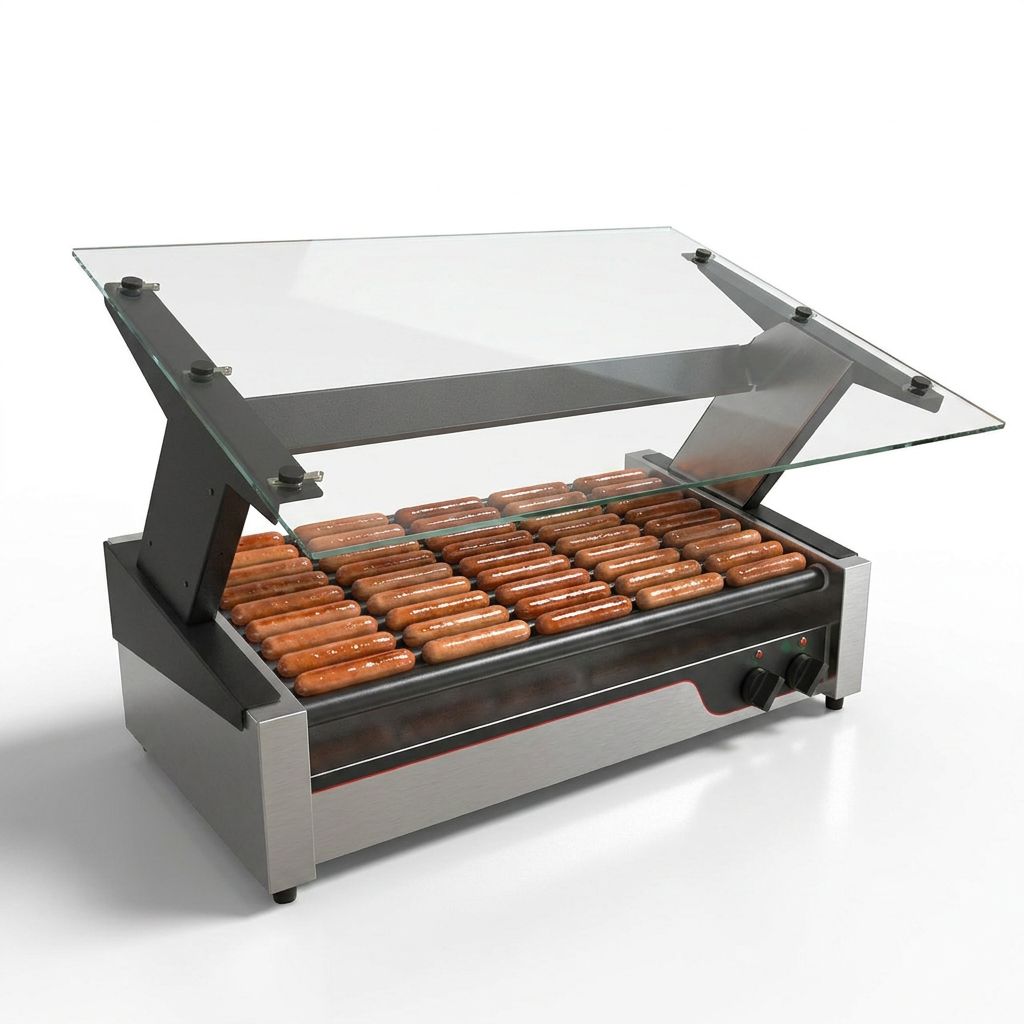
Supporting equipment can reinforce that efficiency. The FCI EZ-Tilt™ Sneeze Guard is designed to provide easier access for cleaning, restocking, and routine maintenance while keeping roller grill products visible to customers.
The First Ten Seconds: Visibility Creates Opportunity
Not every customer enters a store planning to buy food. Some are stopping for fuel. Some want coffee. Some need a drink. Others are trying to get back on the road as quickly as possible.
That makes the first few seconds of the in store experience critical.
Can customers immediately see that hot food is available? Can they tell what is being served? Does the food look organized, protected, and ready? Is the path from noticing the food to purchasing it obvious?
The roller grill has a built in advantage: the product is visible before the customer makes the decision.
That idea is reinforced by both consumer research and current merchandising guidance. The NACS roller grill survey found that customers specifically value being able to see the product before choosing it. Separately, a 2026 NACS merchandising article argues that strategic merchandising helps customers shop faster, encourages impulse purchases, and builds bigger baskets.
The principle is simple: customers are more likely to buy what they can quickly see, understand, and access.
The Shortest Distance Between Hunger and Purchase
Few foodservice formats compress the buying journey as effectively as a roller grill.
The customer sees the food. Recognizes the format. Understands that it is ready. Chooses an item. Completes the purchase.
There is very little explanation required, and very little waiting.
That matters in convenience retail because speed is part of the value proposition. Roller grill food can complement larger prepared food programs precisely because it serves a different mission: the customer who wants something hot now.
NACS has described convenience stores as offering a broader mix of breakfast, lunch, dinner, roller grill, grab and go, beverages, and snacks than a typical quick service stop. That variety makes the c store uniquely capable of serving different customers in the same vehicle or group. The roller grill complements modern foodservice rather than competing with it.
Today’s Roller Grill Is a Menu Platform, Not a Hot Dog Machine
Hot dogs remain iconic, but the modern roller grill menu has expanded far beyond them.
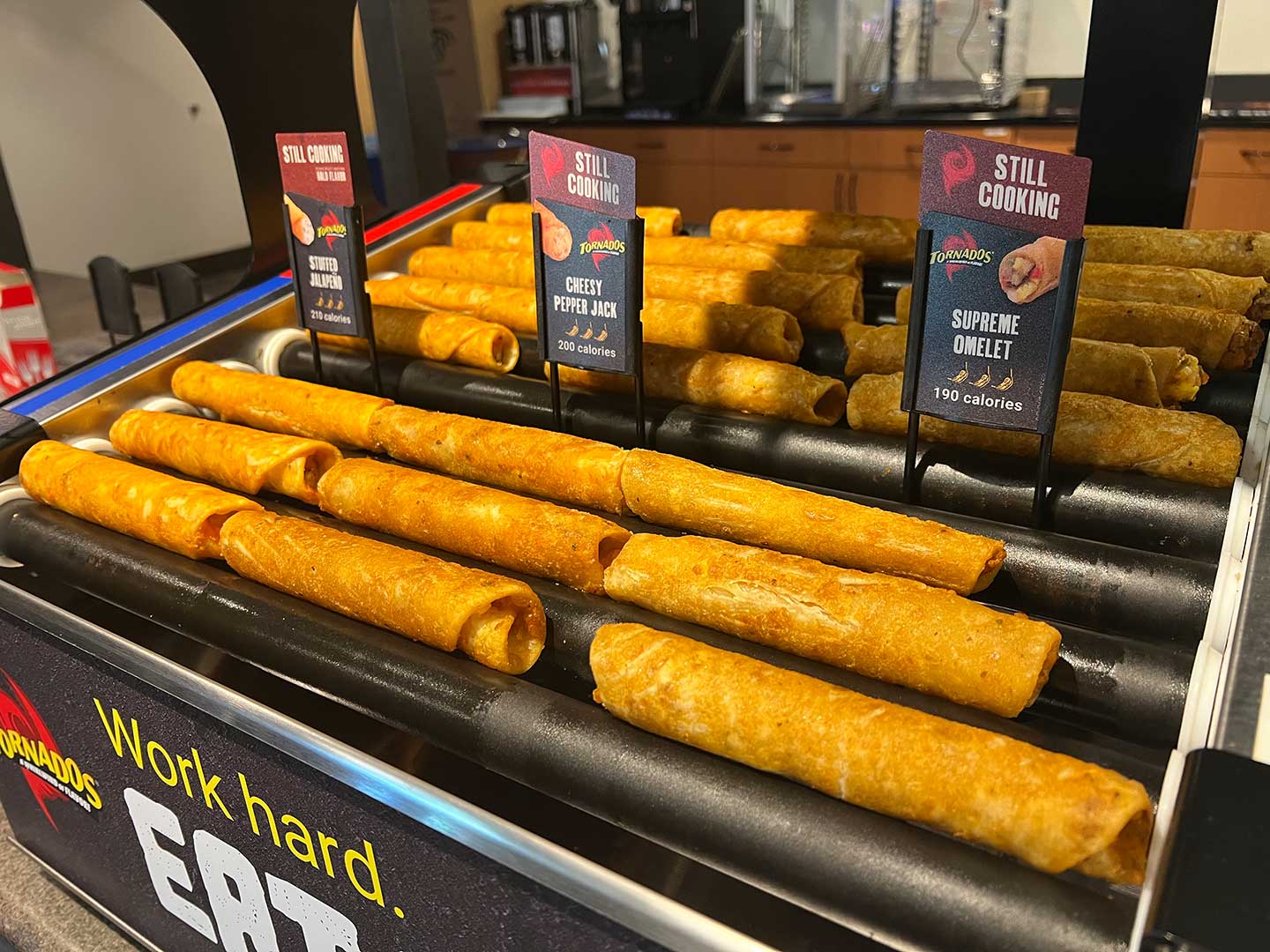
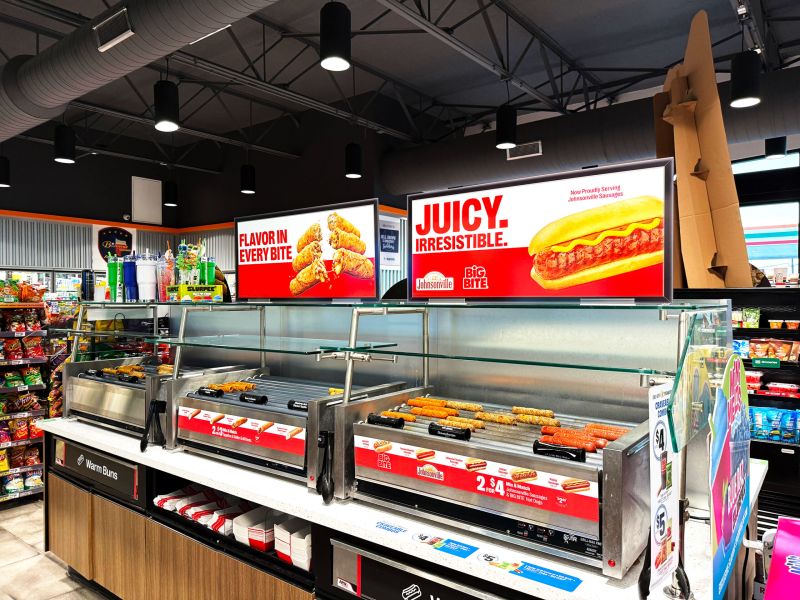
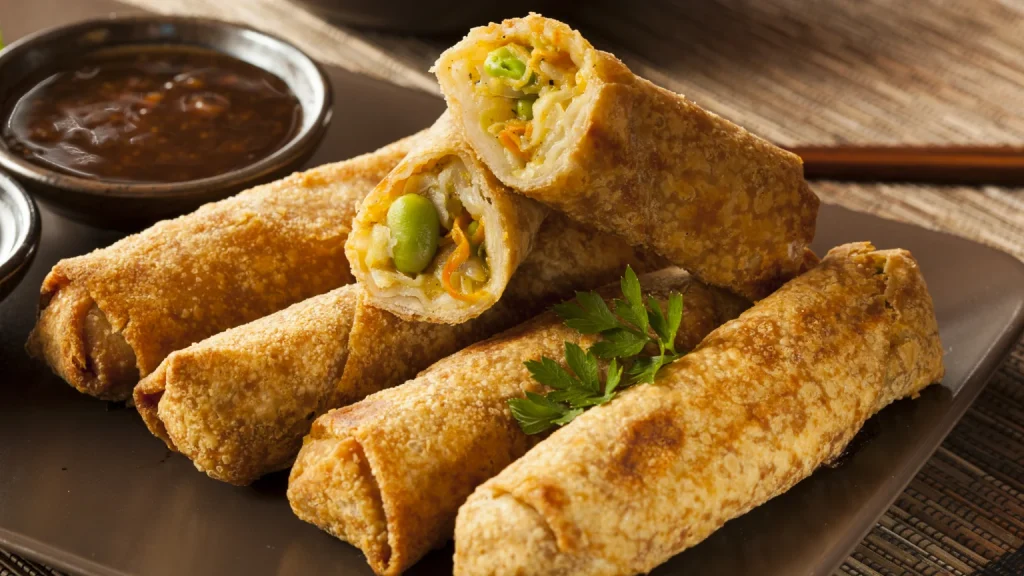
Premium sausages, breakfast items, taquitos, Tornados®, RollerBites®, chicken products, filled snacks, egg rolls, regional flavors, and limited time offers have widened both the customer base and the number of dayparts the platform can serve.
That adaptability is one reason the format continues to remain relevant. The equipment can stay familiar while the menu changes around it.
In the NACS “Let It Roll” feature, retailers and suppliers pointed to bold flavors, globally inspired options, younger consumers, and limited time offers as sources of continued momentum. CSP has made a similar case, noting that bold and globally inspired roller grill flavors can help create repeat visits and attract new customers.
The broader prepared food market is moving the same way. CSP’s 2026 prepared foods research found that retailers have been able to grow or maintain food sales in part by continually refreshing prepared food offerings as customer demand changes.
The lesson is not to chase every trend. It is to use a proven platform that can support experimentation without forcing the operator to rebuild the entire foodservice program every time tastes change.
Demand Is Not Confined to One Daypart
One of the strongest reasons to view the roller grill as a revenue platform is its ability to participate in more than one eating occasion.
Historically, lunch has been a major daypart, but the opportunity is broader. Breakfast products can build morning sales. Portable protein and filled snacks can serve mid morning and afternoon. Traditional hot dogs, sausages, and taquitos remain strong lunch and evening options. Late night traffic can be especially valuable in travel, entertainment, and twenty four hour environments.
Different locations will produce different demand curves, which is why operators still need good sales data, disciplined build to levels, and smart menu planning. But the platform itself is not locked into a single hour of the day.
RollerGrill.com has explored this evolution in “The Roller Grill Isn’t Just for Lunch Anymore,” which looks at breakfast, handheld snacks, portable protein, and all day grab and go demand as opportunities for operators to use equipment already on the sales floor more effectively.
One Platform, Many Foodservice Environments
The roller grill is strongly associated with convenience stores, but its underlying economics apply anywhere operators need hot food, speed, visibility, and a compact footprint.
A travel center values speed and all day availability. A stadium or arena values throughput. A hospital or corporate dining environment values convenience between scheduled meal periods. A school or university can use the format for portable food between classes and events. A food truck or kiosk values equipment that can earn revenue without consuming excessive space. A Little League complex or community concession stand needs food that is recognizable, fast, and easy to serve during concentrated rushes.
The customer changes. The business problem often does not.
Serve people quickly. Keep execution consistent. Make the food easy to discover. Use the available space productively.
Throughput Matters When Everyone Gets Hungry at Once
Foodservice demand is not always smooth. It arrives in waves.
Halftime. Intermission. Shift change. The morning commute. Lunch rush. School dismissal. Tournament breaks. Fuel stops on a holiday weekend.
In those moments, throughput becomes part of the ROI equation. Operators need food that is already visible and ready to move when customers arrive. A platform that can cook and hold multiple items in a customer facing format gives operators a way to prepare for demand before the line forms.
That is one reason roller grills have remained at home in high traffic environments for so long. The machine is not simply cooking food. It is helping the operator stage demand.
Merchandising Turns Equipment Into a Destination
The machine is only part of the program.
Product identification, cleanliness, food protection, placement, condiments, packaging, beverage attachment, and signage all influence whether the customer sees a destination or simply sees a piece of equipment.
The best roller grill programs make the decision easy. Customers know what is available. The area looks clean and intentional. The products are easy to identify. Complementary items are nearby.
NACS consumer research repeatedly emphasizes cleanliness, visibility, and presentation around roller grill foodservice. RollerGrill.com expands on the same idea in “What Makes Someone Stop?”, which looks at how equipment placement, presentation, cleanliness, and merchandising influence whether an unplanned food purchase ever happens.
A profitable foodservice destination is rarely created by equipment alone. It is created by the experience around the equipment.
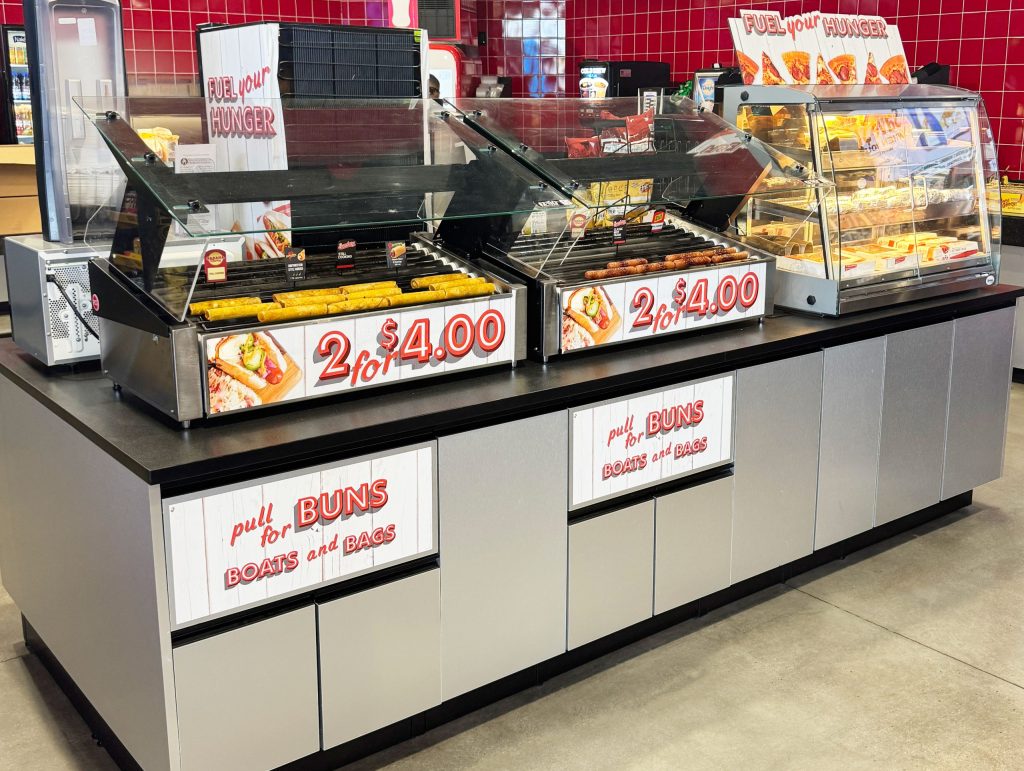
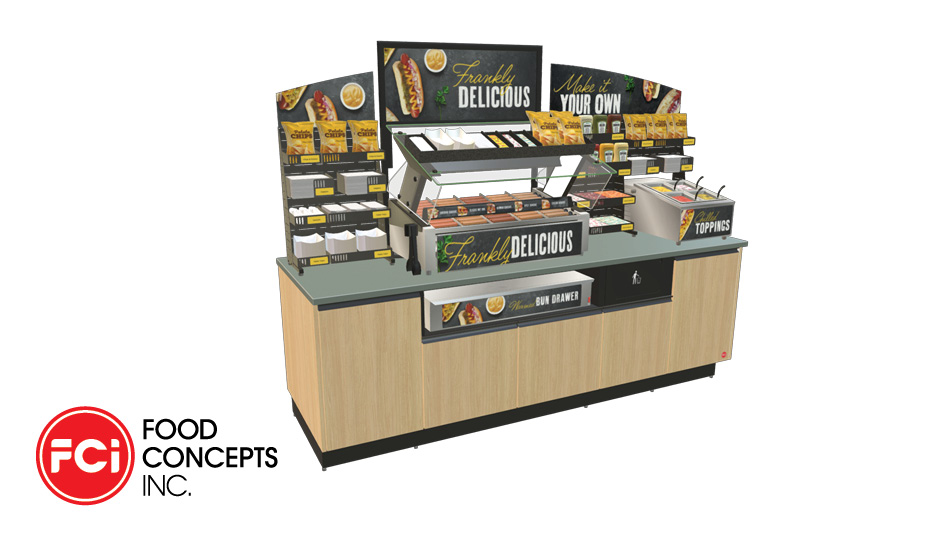
For operators thinking about the station as a complete destination, Food Concepts, Inc. (FCI) demonstrates how equipment, food protection, cabinetry, organization, and merchandising can work together in its Ultimate Roller Grill Setup. Operators comparing equipment configurations can also use the FOODPROS Roller Grill Buying Guide and browse FOODPROS commercial roller grills and accessories.
The Return on Visibility
ROI is usually discussed in terms of cost, margin, labor, and sales. Those matter. But visibility deserves a place in the equation too.
A hidden food program cannot generate an impulse purchase. A confusing program creates hesitation. A poorly stocked or poorly presented program weakens trust.
The roller grill is unusually strong at putting the product itself at the center of the merchandising experience. That visibility helps customers make a decision without requiring a long sales message or complicated ordering process.
Visibility creates opportunity. Opportunity creates transactions. Transactions are what allow a compact piece of equipment to earn its floor space over and over again.
Why the Roller Grill Renaissance Is Happening Now
The roller grill did not suddenly become useful again. The market moved toward many of the strengths it already had.
Prepared food is gaining share of impulse purchases. Convenience foodservice is growing faster than the broader foodservice market. Operators are under pressure to simplify execution. Consumers still value speed, visibility, portability, variety, and familiar value. Protein focused and snackable foods continue to create opportunities throughout the day.
Put those trends together and the renewed attention makes sense.
The roller grill renaissance is not about returning to yesterday’s convenience store. It is about recognizing that a proven platform has become even more relevant to today’s operating environment.
RollerGrill.com has already documented how the category is responding to the current protein conversation in “Roller Grills Are Not Going Anywhere, Even in the Protein Era,” arguing that the opportunity is to evolve the menu rather than replace a dependable platform.
What Smart Operators Should Measure
A roller grill is not automatically profitable simply because it is installed. Like every foodservice program, it needs management.
Operators should monitor product mix, daypart demand, sell through, waste, stocking levels, attachment sales, and customer response to new flavors or promotions. The right assortment in one location may not be the right assortment in another.
That is where the platform’s flexibility becomes valuable. Test. Measure. Adjust. Repeat.
The objective is not to keep the grill full at any cost. The objective is to keep the right products available at the right time, with enough visibility and variety to capture demand without creating unnecessary waste.
The Roller Grill Earned Its Staying Power
Foodservice will continue changing.
Menus will evolve. Technology will improve. Customer expectations will rise. New formats will appear. Some will become permanent, and others will disappear.
The roller grill has already survived decades of that change because it solves enduring business problems: how to serve hot food quickly, how to make it visible, how to use limited space productively, how to support multiple dayparts, and how to create a purchase with very little friction.
That staying power is not an argument against innovation. It is evidence of adaptability.
The roller grill does not compete with modern foodservice. It complements it.
For operators building a new program or rethinking an existing one, the business case is worth another look. A small footprint can create a surprising amount of opportunity when the equipment, menu, merchandising, and execution work together.
RollerGrill.com brings these ideas together in one resource hub for roller grill trends, capacity planning, merchandising, and foodservice insights.
Sometimes the most profitable square foot in foodservice is not the biggest. It is the one that never stops working.
That is the Roller Grill Renaissance.
Frequently Asked Questions About Roller Grills
Are roller grills still popular in convenience stores?
Yes. Roller grills remain a practical hot food platform for convenience stores because they combine product visibility, a compact footprint, simple operation, and the ability to serve customers throughout multiple dayparts. Modern roller grill programs can also offer far more than traditional hot dogs, helping stores adapt the menu to changing customer preferences.
What foods can you cook on a commercial roller grill?
Commercial roller grills can support a variety of portable hot foods, including hot dogs, sausages, breakfast items, taquitos, Tornados®, RollerBites®, egg rolls, chicken products, and other foods designed for roller grill preparation. Always follow the food manufacturer’s cooking and holding instructions for the specific product.
Why are roller grills a good choice for convenience store foodservice?
Roller grills can turn a relatively small amount of counter space into a visible hot food destination. They can support multiple dayparts, accommodate different menu items, simplify service, and create opportunities for additional purchases such as beverages, buns, condiments, and complementary snacks.
How can I increase roller grill sales?
Start with visibility, freshness, variety, and availability. Keep popular products stocked during the dayparts when customers want them, make the selection easy to understand, and merchandise complementary items nearby. Tracking sales by product and daypart can also help identify which foods deserve more space and when inventory should be adjusted.
What should I look for when choosing a commercial roller grill?
Consider your expected customer volume, available counter space, peak demand periods, menu variety, cleaning requirements, merchandising visibility, food protection needs, and the number of products you plan to offer. Choose a roller grill and supporting foodservice setup that can handle current demand while giving the program room to grow.