
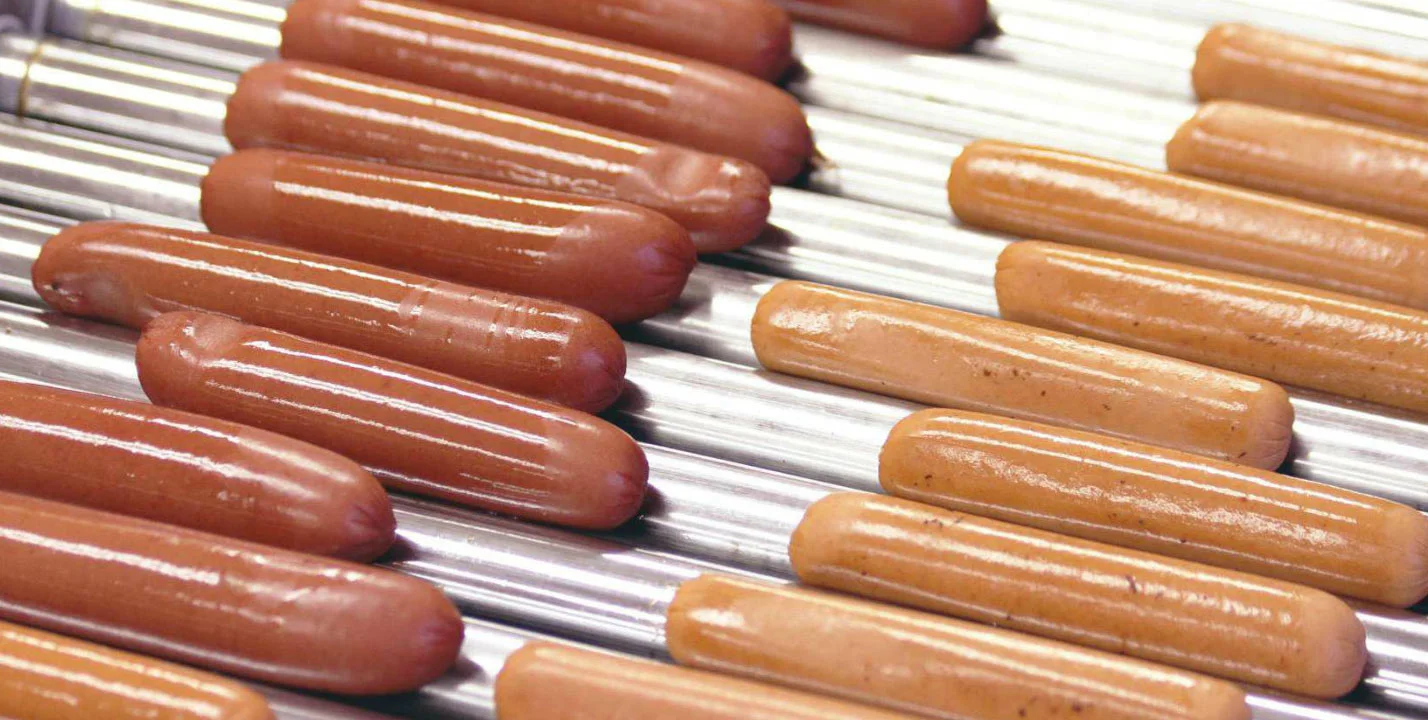
For c-store operators, the roller grill vs. grab-and-go decision should come down to one thing: which format best fits the customer, space and operation.
For decades, the roller grill has been a familiar part of convenience store foodservice. But like every piece of equipment in a store, familiarity alone is not a reason to keep it.
Kwik Trip recently announced that it will remove roller grills from its 900-plus stores by September 21, 2026. The hot dogs, brats, Tornados and other products are not disappearing. Instead, they will be individually packaged and moved into the retailer’s Hot Spot grab-and-go area. Kwik Trip said testing showed the products performed better when sold from the hot grab-and-go section.
That is a significant move from a major convenience retailer, and it raises a fair question for other operators:
Should you keep the roller grill or move hot food to grab-and-go?
There is no universal answer.
A roller grill can be an efficient, highly visible foodservice platform. Hot grab-and-go can provide exceptional speed and simplicity. The better format is the one that fits the location, the customer and the operation.
The real question is whether your current foodservice format is earning the space it occupies.
Start With How Your Customers Actually Shop
Convenience is the foundation of convenience retail, but convenience can mean different things in different locations.
For one customer, convenience may mean grabbing an individually wrapped hot dog from a heated display and heading directly to the register.
For another, it may mean seeing a grill filled with several choices, selecting the exact item they want, adding toppings and building a quick meal.
Look at actual behavior in the store.
- Are customers stopping at the roller grill?
- Do they understand what products are available?
- Are they comfortable serving themselves?
- Are certain products consistently chosen while others sit?
- Does the program generate beverage, chip or other add-on purchases?
- Are customers bypassing the grill for packaged hot food nearby?
The equipment should support the way customers want to buy, rather than requiring customers to adapt to the equipment.
1. Look at Visibility Before Blaming the Format
Before deciding a roller grill is underperforming, look at where it is located and how it is presented.
A grill that customers barely notice is very different from a grill positioned as a visible foodservice destination.
Ask:
Can customers see the food from the natural path through the store?
Can they quickly identify what is cooking?
Is pricing clear?
Can they easily find buns, packaging, condiments and napkins?
Does signage help explain the offer, or does it block the food?
Product visibility is one of the natural strengths of a roller grill. Customers can see the food rather than looking at a photograph on a package.
But that advantage disappears if the grill is poorly positioned, overcrowded with signage or disconnected from the rest of the foodservice program.
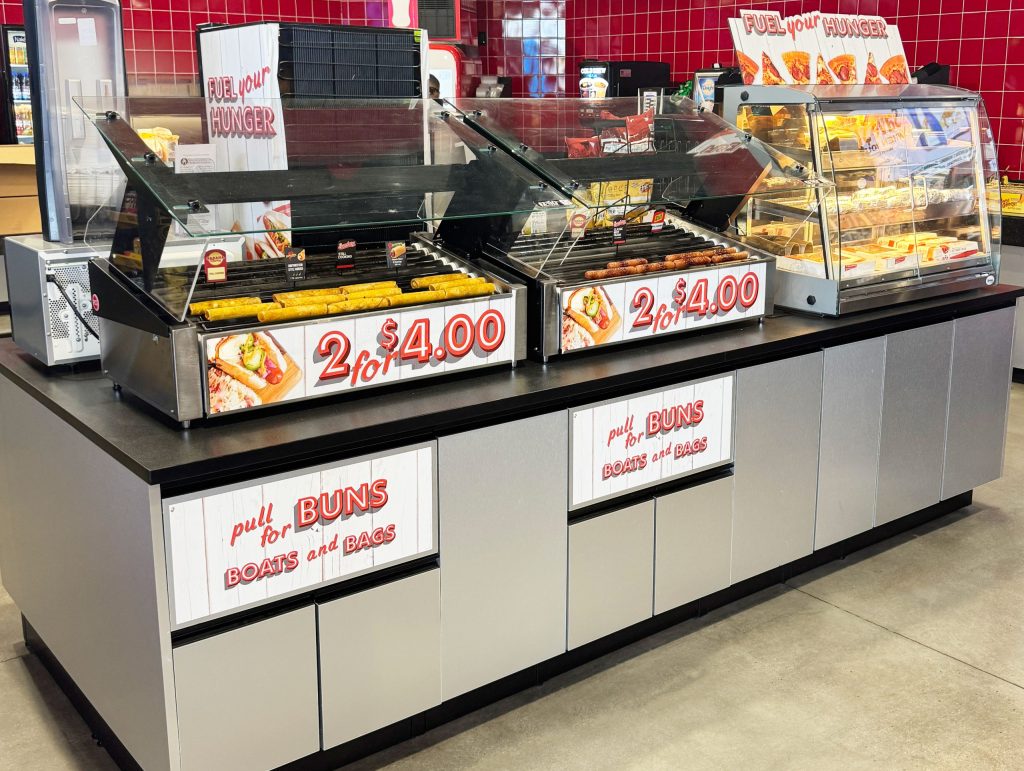
Our guide to the modern roller grill program looks more closely at how visibility, assortment, merchandising and customer flow work together.
2. Compare Speed and Customer Effort
Hot grab-and-go has an obvious advantage: simplicity.
See it.
Pick it up.
Buy it.
A roller grill involves a few more steps. Depending on the program, a customer may need to choose an item, use tongs, place it in a bun or container, add toppings and dispose of serving materials.
That additional interaction is not necessarily bad.
Customization can add value. A visible assortment can create appetite appeal. Customers may enjoy choosing their own toppings or assembling a quick meal.
But every step should contribute something.
If customers perceive those steps as friction rather than choice, packaged grab-and-go may be the stronger format.
3. Match Capacity to Actual Demand
A roller grill should be sized for the business it is expected to do.
Too little capacity can create out-of-stocks during busy periods.
Too much capacity can lead to unnecessary product holding, waste and an oversized piece of equipment occupying valuable counter space.
Commercial roller grills are available in different widths and capacities, making it possible to match the equipment more closely to expected volume.
Instead of asking, “How big of a grill can we fit?”
Ask:
How much product do we realistically need available during our busiest periods?
That distinction matters.
The right capacity helps an operator keep the program looking abundant without filling the grill simply because the space is there.
4. Measure the Labor Behind the Program
Customers see the finished program.
Employees see everything required to keep it running.
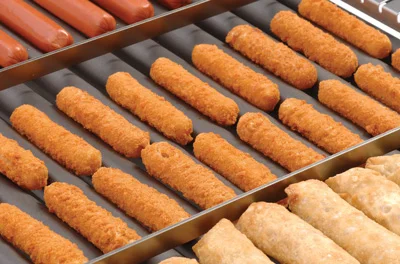
A roller grill program may require employees to:
- load and rotate product
- monitor cooking and holding
- replenish buns and packaging
- maintain condiments and toppings
- clean the grill and surrounding equipment
- manage food protection
- replace signage or product identification
- monitor waste
Hot grab-and-go creates its own operational requirements, including packaging, stocking, rotation, holding and maintaining a heated display.
The important question is not which format requires no labor.
Neither does.
The question is:
Which format can your team execute consistently throughout the day?
A foodservice program that looks excellent at 10 a.m. but neglected at 3 p.m. has an execution problem, regardless of the equipment being used.
5. Understand Waste, Holding and Product Rotation
Food waste deserves its own line in the decision.
Track individual products rather than looking only at total roller grill sales.
Which items turn quickly?
Which products regularly reach the end of their allowable holding period?
Do certain dayparts generate substantially more demand?
Are limited-time products moving incremental volume or simply adding more items employees must manage?
Would individually packaged products improve rotation?
Or would a roller grill allow the store to cook smaller quantities and replenish throughout the day?
The answers will vary by location.
That is why actual store-level data should drive the format decision.
6. Consider What the Format Does for Merchandising
Foodservice equipment does more than cook or hold food.
It also occupies merchandising space.
A roller grill can create a highly visible food destination and support multiple flavors, limited-time offers and meal combinations. It can also connect naturally with buns, toppings, condiments, beverages and sides.
Grab-and-go can concentrate hot food into a high-traffic destination and make selection extremely fast.
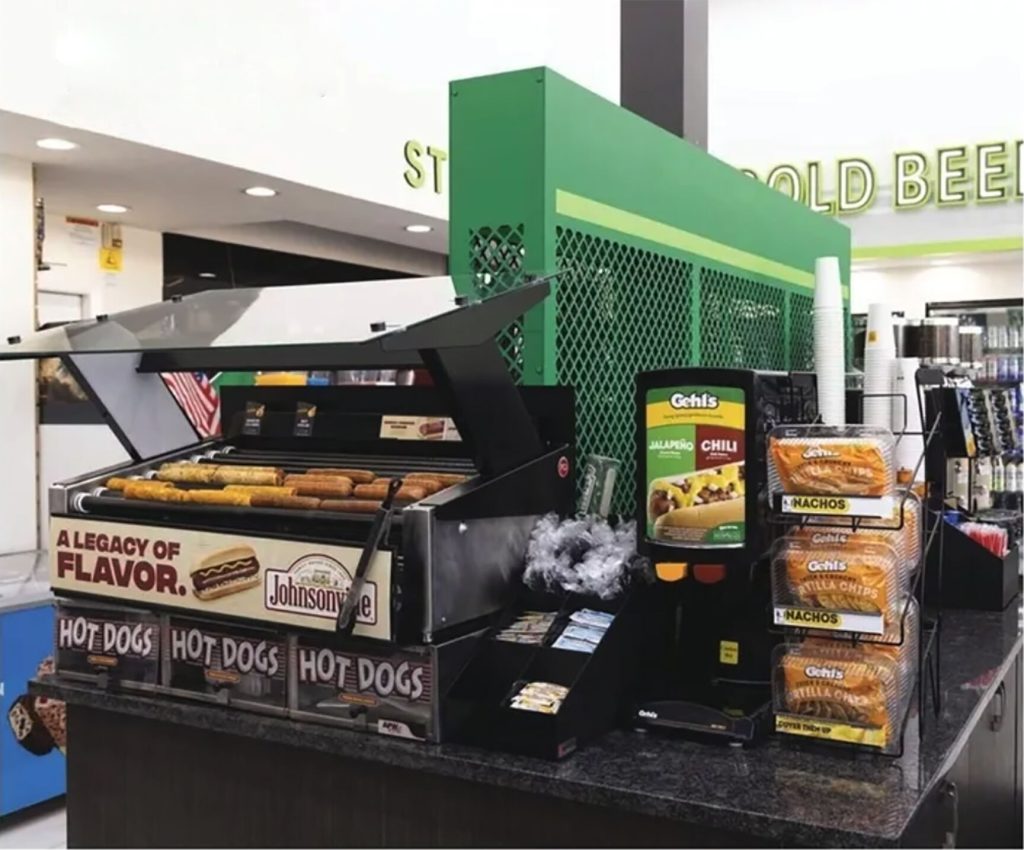
Whichever format is used, look at the entire customer journey around it. A complete roller grill setup considers the grill together with food protection, organization, merchandising and the surrounding fixture environment.
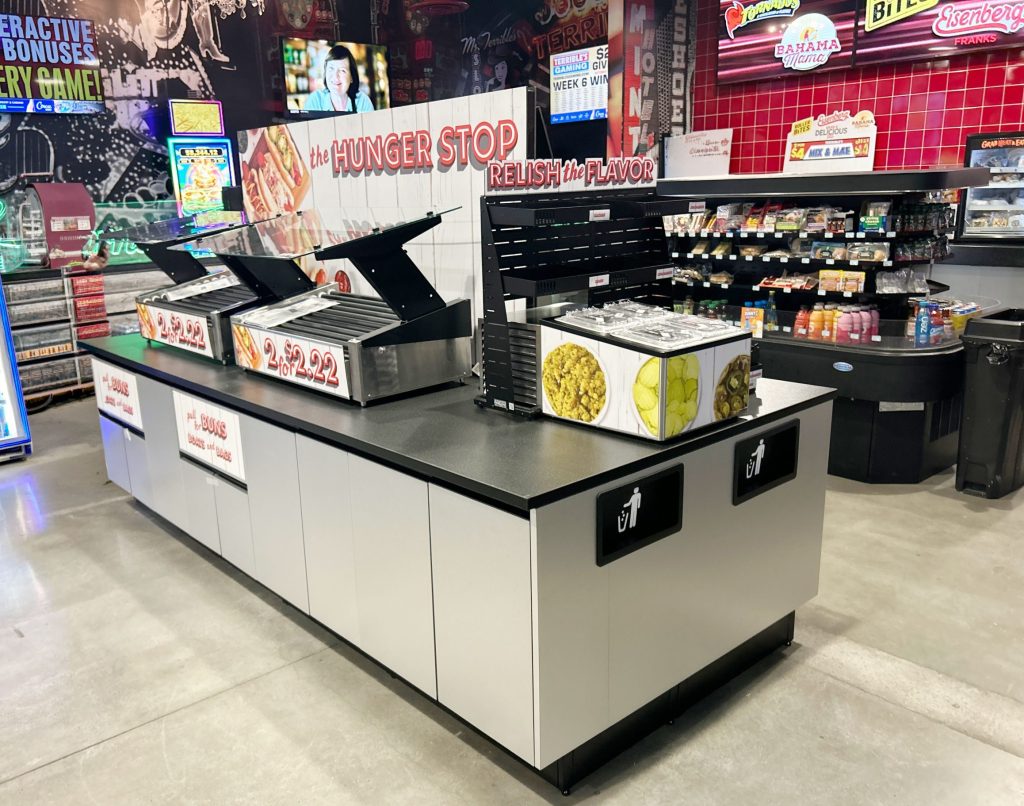
What does the customer see first?
What do they need next?
Where are the natural add-on items?
Can the employee replenish the program without interrupting the customer?
The equipment may occupy only a few feet of counter space, but the program surrounding it determines how productive those feet can become.
7. Ask Whether the Space Could Work Harder
Every square foot inside a convenience store has a job.
That makes the final question surprisingly simple:
Is the roller grill earning its space?
For a high-volume location with strong roller grill sales, good product rotation and a well-executed program, the answer may be an emphatic yes.
For another location, the same footprint may generate more sales as hot grab-and-go, bakery, beverages, impulse merchandising or another foodservice offer.
That does not make the roller grill outdated.
It means the operator is measuring the productivity of the space.
The same standard should apply to every fixture and piece of equipment in the store.
Roller Grill vs. Grab-and-Go: A Quick Comparison
| Consideration | Roller Grill | Hot Grab-and-Go |
|---|---|---|
| Customer speed | Fast, but may require several self-service steps | Extremely fast pickup |
| Product visibility | Food itself is highly visible | Depends on display and packaging |
| Customization | Strong potential for buns, toppings and condiments | Typically more limited |
| Assortment flexibility | Multiple products can share the grill | Multiple packaged products can share a heated case |
| Labor | Cooking, monitoring, replenishment and cleaning | Packaging, rotation, stocking and case maintenance |
| Capacity | Determined by grill size and roller count | Determined by display capacity |
| Merchandising opportunity | Strong visual destination and add-on potential | Strong convenience and prominent grab-and-go presentation |
| Best fit | Locations where visible self-service hot food performs well | Locations where speed and packaged convenience perform better |
Before You Remove the Grill, Audit the Program
If a roller grill is underperforming, replacing it may ultimately be the right decision.
But first determine whether the problem is actually the grill.
Look at:
- Sales by item and daypart
- Waste and product rotation
- Customer traffic and visibility
- Product identification and pricing
- Capacity versus actual demand
- Cleaning and employee access
- Condiment and packaging organization
- Add-on purchases
- Out-of-stock periods
- Sales generated per square foot of the program
That analysis can reveal whether the format is wrong or whether the current program simply needs to work better.
The Right Format Is the One That Earns Its Place
Kwik Trip’s decision is important because it demonstrates something every convenience retailer should be willing to do: test the program and change it when the data supports a better approach.
For some locations, that may mean hot grab-and-go.
For others, commercial roller grills remain an effective foodservice platform that combines product visibility, assortment, customization and speed in a relatively compact footprint.
The goal should not be to preserve a piece of equipment because it has always been there.
It should also not be to remove it simply because another retailer made a different decision.
Evaluate the customer. Evaluate the operation. Evaluate the numbers.
Then choose the foodservice format that earns the space.
Because ultimately, the question is not whether the roller grill is still relevant.
The question is whether your roller grill program is working.
Frequently Asked Questions
Are roller grills still a good option for convenience stores?
They can be. Roller grills offer visible hot food, relatively compact capacity and opportunities for multiple products, customization and meal combinations. Their effectiveness depends on customer demand, location, assortment, merchandising and how consistently the program is operated.
Is hot grab-and-go better than a roller grill?
Not necessarily. Hot grab-and-go can reduce customer steps and make purchasing extremely fast. Roller grills can provide greater product visibility and customization. Operators should compare sales, waste, labor, customer behavior and space productivity before deciding which format works better.
How do I know what size roller grill I need?
Start with expected peak demand rather than available counter space alone. Consider how many products need to be available during the busiest dayparts, how quickly those products sell and how frequently employees can replenish the grill.
What makes a roller grill program successful?
A strong program combines the right equipment capacity with product visibility, clear identification and pricing, appropriate assortment, easy customer access, organized condiments and packaging, food protection, regular replenishment and an employee-friendly setup.
Should every convenience store use the same hot-food format?
No. Customer behavior, store footprint, traffic patterns, labor availability, assortment and sales volume can vary significantly by location. The strongest format is the one the individual operation can execute consistently and profitably.