
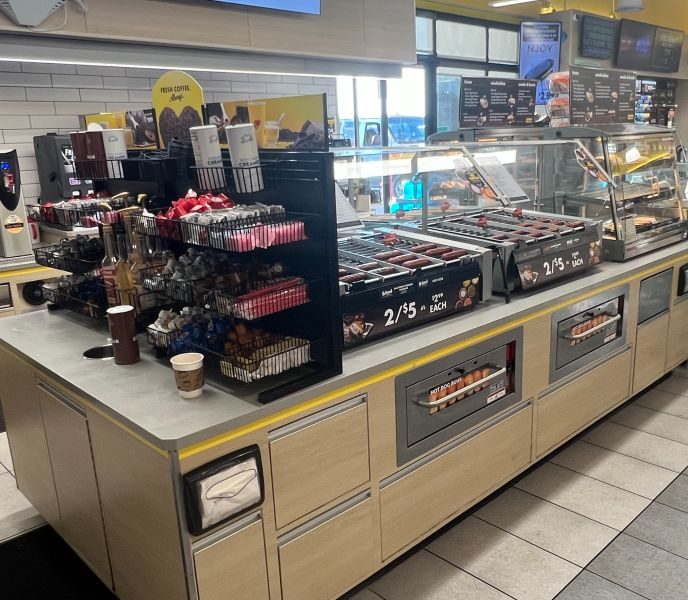
A Roller Grill Program Should Be Built to Change
The roller grill may be one of the most familiar pieces of equipment in convenience foodservice.
That does not mean the program around it should stay the same.
Menus are moving faster. Flavors are changing. Limited-time offers are becoming more common. Dayparts are blurring. Customers are more willing to try something new, but they still expect convenience, clarity and speed.
The opportunity for operators is not to rebuild the program every time the menu changes.
It is to build the roller grill program with enough flexibility to change with it.
Familiar Platform, New Reasons to Look Again
Recent retailer activity shows exactly what that can look like.
7-Eleven recently introduced its Flavors of Korea lineup, including a Korean-style BBQ sausage on the roller grill alongside other hot-food and grab-and-go items.
The important part is not the specific flavor.
It is what the launch represents.
A familiar piece of equipment is being used to introduce a very different flavor profile without requiring the retailer to reinvent the operating platform.
That is the kind of flexibility a strong roller grill program should be able to support.
Product Mix Should Be Able to Evolve
A roller grill assortment does not have to stay locked into the same few products year after year.
Operators can use the platform to test:
- new flavors
- limited-time offers
- seasonal products
- regional preferences
- different proteins
- breakfast items
- lunch and snack options
That kind of variety gives customers more reasons to notice the program again.
But variety only works when the operation can still execute it.
More Variety Is Not Automatically Better
There is a point where assortment stops being interesting and starts becoming complicated.
Every additional product creates another question:
- Does it need its own identification?
- Does it cook at the same rate?
- Does it have the same holding time?
- Does it need separate merchandising?
- Will employees know where it belongs?
- Will customers understand what they are looking at?
A strong assortment gives customers meaningful choice.
An overcrowded assortment can create confusion, waste and unnecessary operational work.
The goal is not to fill every available roller.
The goal is to make every product earn its place.
Capacity Still Has to Match the Assortment
When product variety changes, capacity planning changes with it.
A grill may technically hold a large number of products, but that does not mean every position should carry a different item.
Operators still need to consider:
- peak demand
- product velocity
- replenishment frequency
- holding time
- waste
- daypart demand
- how much visual abundance the program needs
The right capacity helps the program look full and appealing without creating unnecessary product holding or forcing employees to manage more than the store can realistically support.
Merchandising Matters More as Variety Grows
The more products a roller grill carries, the more important clear merchandising becomes.
Customers should not have to guess what is cooking.
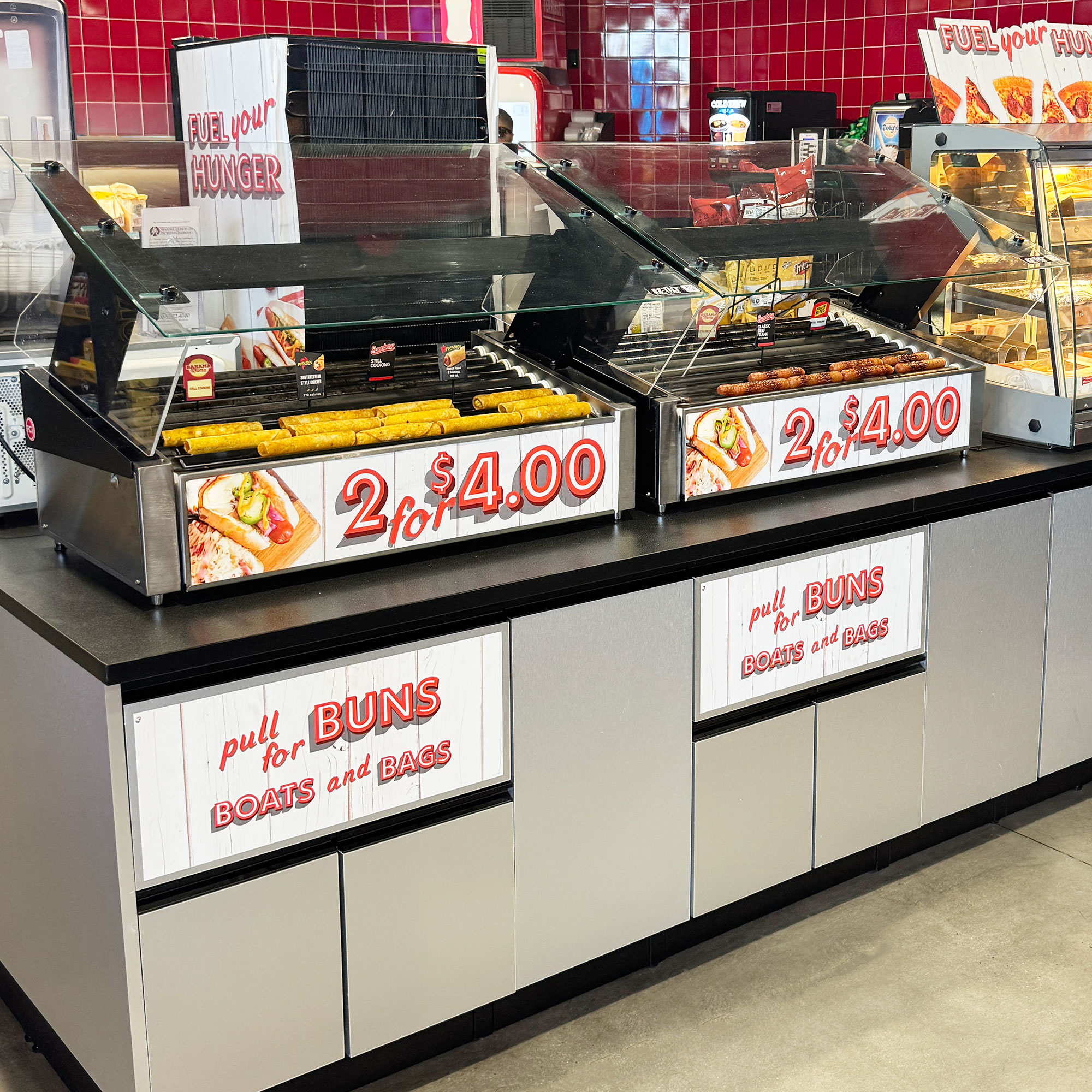
Product identification, pricing, packaging, buns, condiments and nearby add-on items should all help the customer move through the decision quickly.
New or unfamiliar flavors especially need support.
A customer may recognize a hot dog immediately.
A Korean BBQ sausage or another limited-time flavor may need a little more explanation.
That is where signage and product identification become part of the selling process.
Dayparts Create Another Layer of Flexibility
The same grill may serve very different customers throughout the day.
Breakfast has become a moving target.
Lunch is a major opportunity.
Snacking can happen almost anytime.
That means the assortment does not necessarily need to stay static from opening to close.
A program can rotate products based on when customers are most likely to buy them, as long as the operation can manage the transitions cleanly.
The platform stays familiar.
The offer changes with the customer.
LTOs Should Add Interest, Not Operational Friction
Limited-time offers can be a strong way to bring attention back to the roller grill.
They can create urgency, introduce new flavors and give regular customers something different to try.
But an LTO should not create so much operational complexity that it becomes difficult to execute.
Before adding one, ask:
- Does it fit the existing equipment?
- Can employees identify and manage it easily?
- Does it work with current packaging and merchandising?
- Can it be replenished without disrupting the rest of the program?
- Is the expected demand worth the added complexity?
The strongest LTOs feel new to the customer without making the entire program feel new to the employee.
Build the Program for Change
The roller grill is not a static category.
The products are changing.
The flavors are changing.
The meal occasions are changing.
The customer is changing.
That does not mean operators need to replace the platform every time the menu evolves.
It means the program should be built with enough flexibility to support what comes next.
The strongest roller grill programs balance variety with simplicity, innovation with execution and new ideas with a platform the store already knows how to run.
Because the question is not whether the roller grill can change.
It is whether the program around it was built to.